
Law, Euthanasia, and the Box Man
The Box ManThe narrator’s argument that box men exist beyond legal protection turns social exclusion into a disturbing claim about violence and responsibility.
increasing Bearing strength in each event
 decreasing
Bearing strength in each eventdecreasingA Person Without Records
Identity and Legal Standing
The absent identifiers
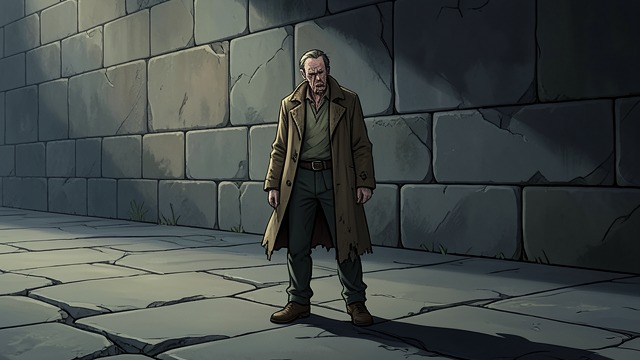
The narrator lists the documents, address, occupation, and routines that a box man may lack. These omissions separate him from systems that depend on identifiable citizens.
A contested existence
He claims that society does not recognize box men clearly, even though they remain physically present. The argument begins as a description of exclusion and moves toward a more radical question about protection.
The Euthanasia Precedent
Conditions for Euthanasia
A legal framework
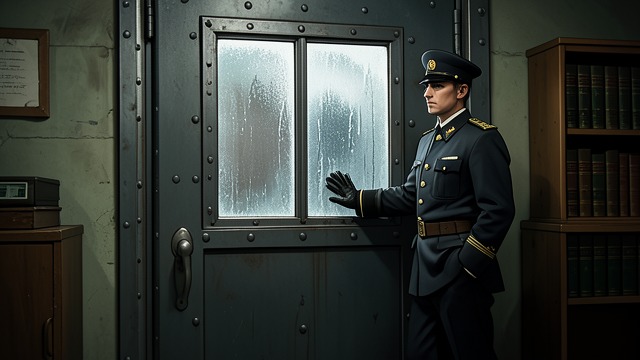
The narrator cites the Nagoya Superior Court precedent, listing incurable illness, unbearable pain, consent, medical intervention, and appropriate means among its conditions.
A broadened argument
He considers the precedent too narrowly focused on physical suffering. This critique prepares his attempt to extend the language of euthanasia beyond the court’s stated circumstances.
The Box Man as an Excluded Subject

An Extreme Analogy
Legal nonexistence asserted
The narrator argues that a box man’s life is not recognized by law in the same way as that of an ordinary citizen. He compares this condition with that of a soldier or a condemned criminal.
A dangerous conclusion
From exclusion, he proposes that violence against box men could be treated as euthanasia. The reasoning exposes the cruelty of his premise but does not establish it as a legal fact.
The Executioner’s Dilemma

Death as Requested Assistance
A staged argument
The narrator addresses a person he imagines entering the morgue to kill him and repeatedly says he has chosen death. He attempts to make the other person an accomplice rather than the sole responsible party.
Consent under strain
His professed willingness is unstable, and he alternates between requesting help and inventing reasons to resist. The scene makes responsibility inseparable from a mind divided against itself.
No Legal Resolution

Responsibility Remains Unsettled
A death imagined in detail
The narrator describes a possible injection and the staging of a drowning, while acknowledging that an autopsy could expose the deception. The writing renders a plan vividly without confirming that it occurs.
A moral problem survives
His claim that the executioner bears no crime conflicts with the evident human consequences of killing. The novel leaves the legal and ethical question open rather than endorsing the narrator’s argument.
During the narrator’s account of box life
During the narrator’s discussion of a court ruling
Immediately after the narrator lists the precedent
During the narrator’s account in the morgue
Near the end of the executioner passage
